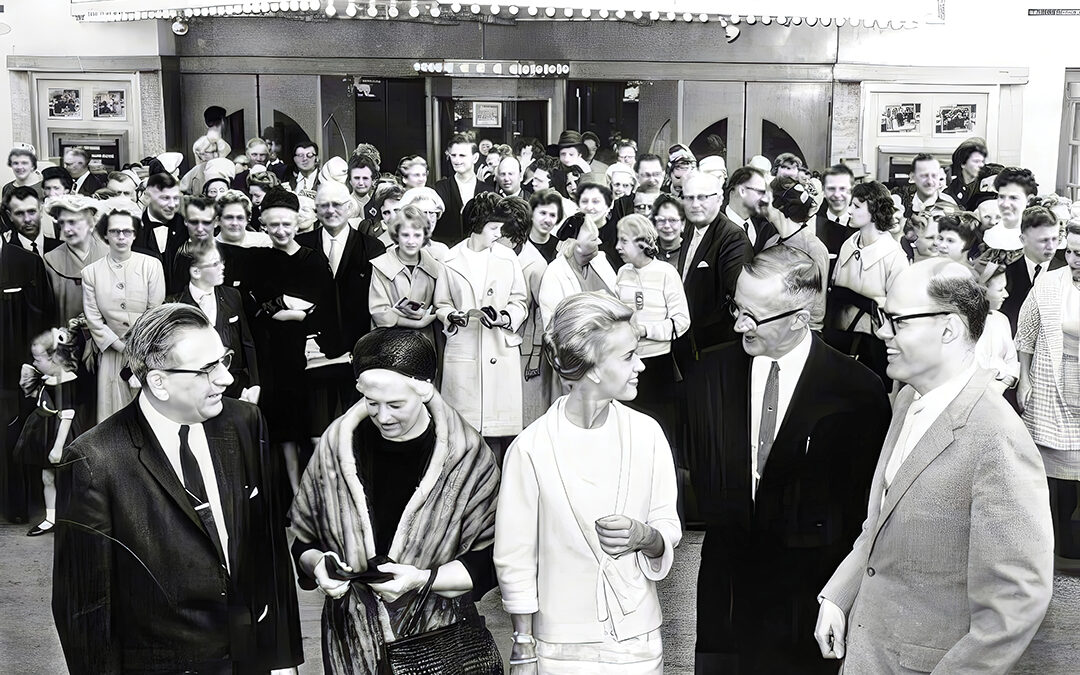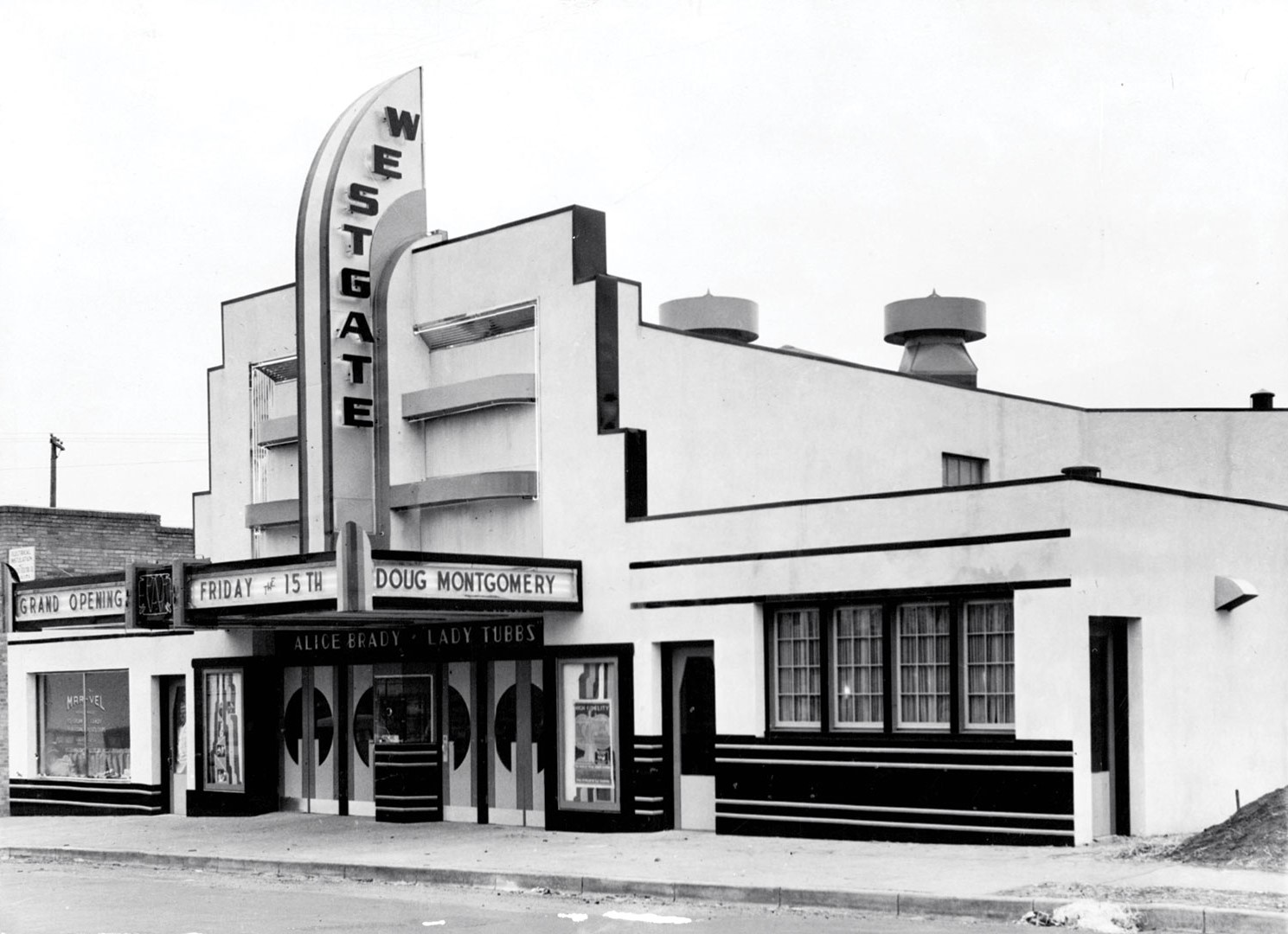
The Westgate Theater in 1935. (From Marjorie Fust Delin family collection.)
An area author resurrects the story of how a bygone theater made box-office history.
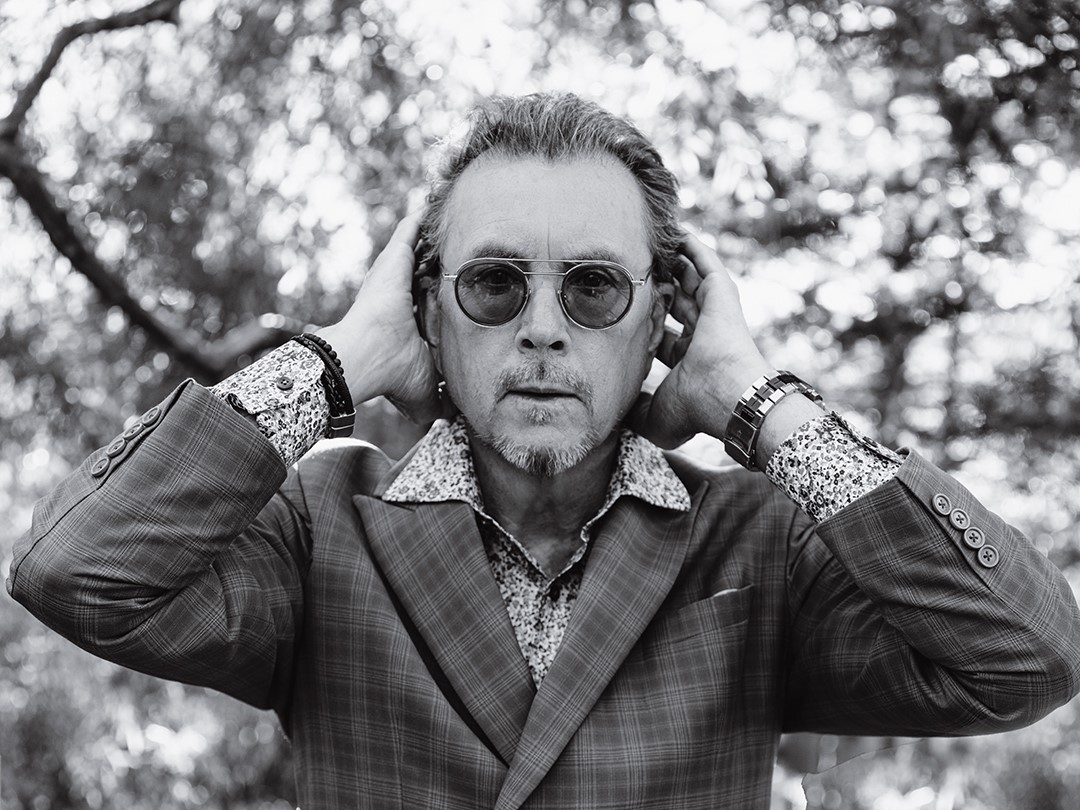
John Gaspard is retelling a remarkable chapter of movie history in his new book, Held Over: Harold and Maude at the Westgate Theater. It’s the story of how Edina’s Westgate Theater kept a film alive and helped transform it into a cult classic after the rest of the industry wrote it off. Released in 1971, Harold and Maude was controversial for its time because of the romantic relationship between its two main characters. The dark comedy follows Harold (Bud Cort), who is obsessed with death, and Maude (Ruth Gordon), a free-spirited 79-year-old he meets at a funeral. While Harold fixates on mortality, Maude adores life. Over the course of the film she teaches him how to live fully and find joy. We caught up with Gaspard to learn about his inspiration for the book and how the legacy of the Westgate Theater lives on.
What attracted you to Harold and Maude’s run at the Westgate Theater?
The simple truth is that I found the confluence of the right movie at the right theater at the right time to be an inherently interesting story. If I wrote this book for anyone, I wrote it for myself to read and enjoy.
What makes this story so interesting for readers today?
It’s a testament to the power of grassroots enthusiasm and word-of-mouth marketing. When Harold and Maude was first released, the film was a box-office disappointment in most cities. It opened and closed in two weeks in downtown Minneapolis despite strong local reviews. Harold and Maude’s success at the Westgate was driven by repeat viewers who loved it.
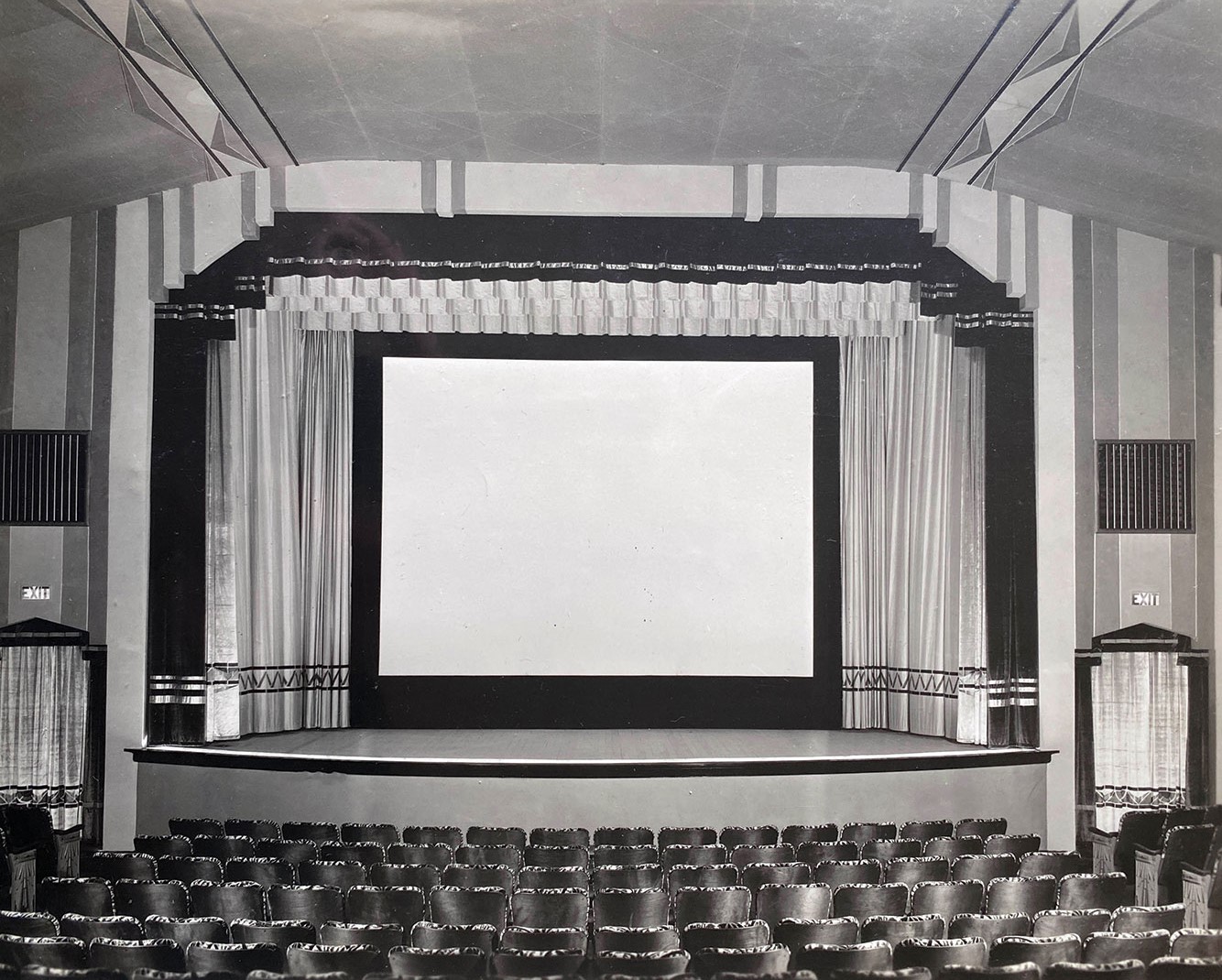
Westgate Theater’s auditorium circa 1935. (From Marjorie Fust Delin family collection.)
How did you research the book?
I looked into both the history of the movie as well as the history of the theater. I was fortunate enough to chat with several of the people who offered first-hand knowledge. This included Nancy Saslow, granddaughter of the theater’s founder, Carl Fust; William (Randy) Greene, assistant manager at Westgate during the run of Harold and Maude; Doug Strand, the legendary “Super Fan” who saw the film 165 times; and Henry Owen, whose wife organized the small protest against the film’s long run.
In addition to those personal accounts, I drew heavily on local archives and historical resources, including the Edina Historical Society and the Minnesota Historical Society and newspapers.com.
Did you encounter any unexpected details?
One of the most surprising discoveries was learning about the history of Westgate itself. When I worked there in 1975, the place was tired and worn. I had no idea that it was once a showplace with a grand and opulent opening in 1935, founded by a visionary musician named Carl Fust, who planned for it to have a stage for an orchestra and a club room for local meetings.
Another interesting tidbit was the fact that such a beloved film didn’t turn a profit until more than 10 years after its release. Ruth Gordon herself recalled that when she received her first profit check for $50,000, she almost threw it away, thinking it was one of those sweepstakes from Reader’s Digest.
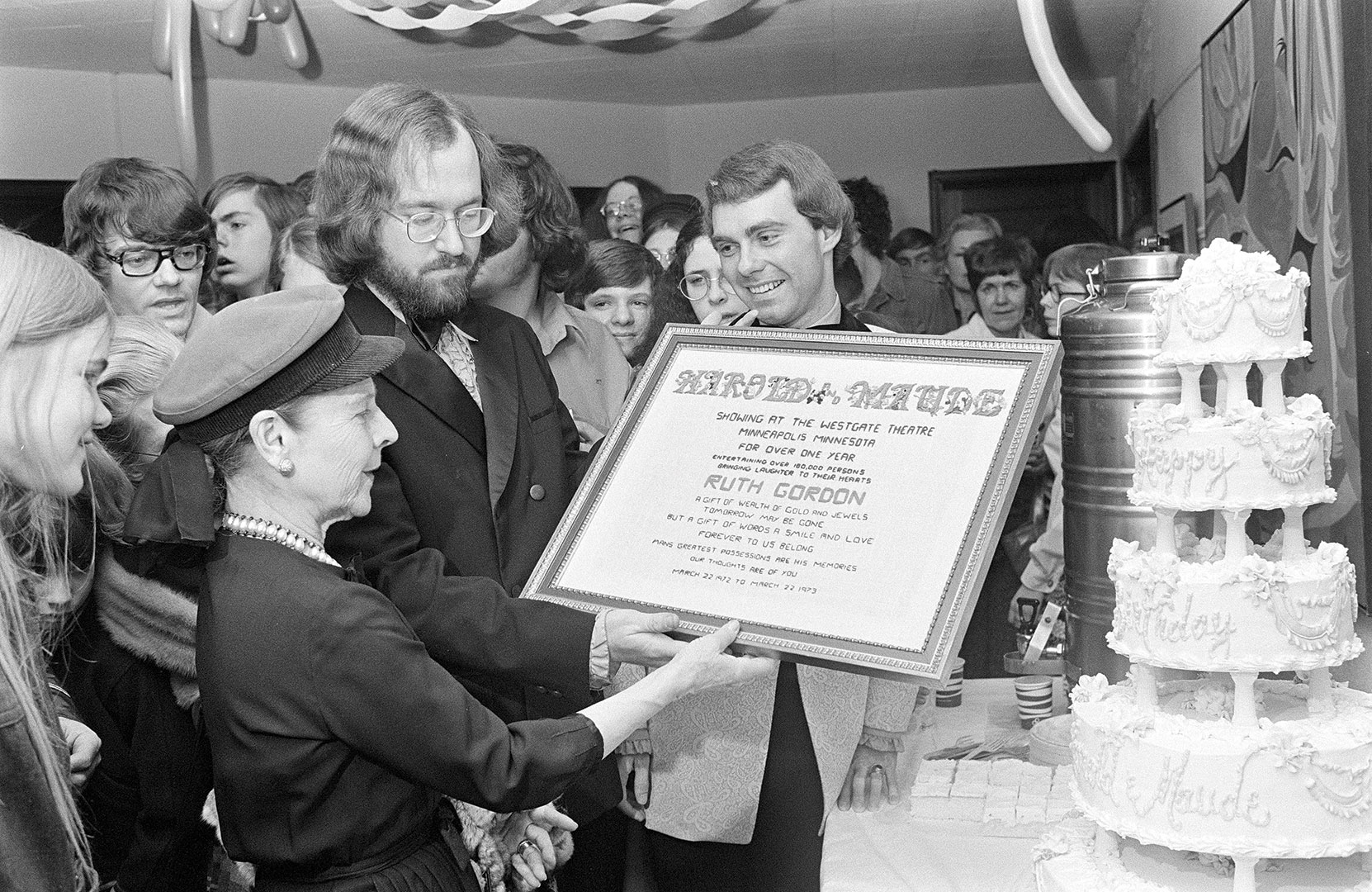
Ruth Gordon receiving a commemorative plaque at Westgate Theater in 1973 as part of the first anniversary of Harold and Maude. (From Minneapolis Star/Minneapolis Tribune, Minnesota Historical Society.)
How did Westgate Theater and its audience play a role in reshaping the legacy of Harold and Maude?
The theater gave the film a second chance. This relentless enthusiasm resulted in Harold and Maude running for 115 weeks, breaking the all-time Minnesota record previously held by The Sound of Music (95 weeks). The run created so much buzz that Paramount Studios began using the Westgate’s success as a centerpiece of national advertising campaigns when re-releasing the film in other cities. In essence, Westgate provided the proof-of-concept that the film was a hit, forcing the rest of the country to pay attention.
Why do you think this story matters?
For the Edina community … it chronicles the history of a beloved local institution and neighborhood resource that is now gone. It reminds us of a time when the neighborhood movie theater was a central part of people’s lives. It’s a tale deeply rooted in the Morningside neighborhood, chronicling everything from its founder Carl Fust to the residents, who protested the film’s long run because they missed having variety.
The book combines film history with local nostalgia. How did you include that balance, and were you aiming for a certain tone?
The book includes dedicated sections to the Westgate before Harold and Maude and the Westgate after Harold and Maude, ensuring the neighborhood theater is as much a character in the book as Harold or Maude.
The tone I aimed for was one of enthusiastic, personal discovery. I wanted the reader to feel like they were coming along for the ride, sharing my own excitement, especially when recounting the chaotic and thrilling two-year anniversary celebration in 1974.
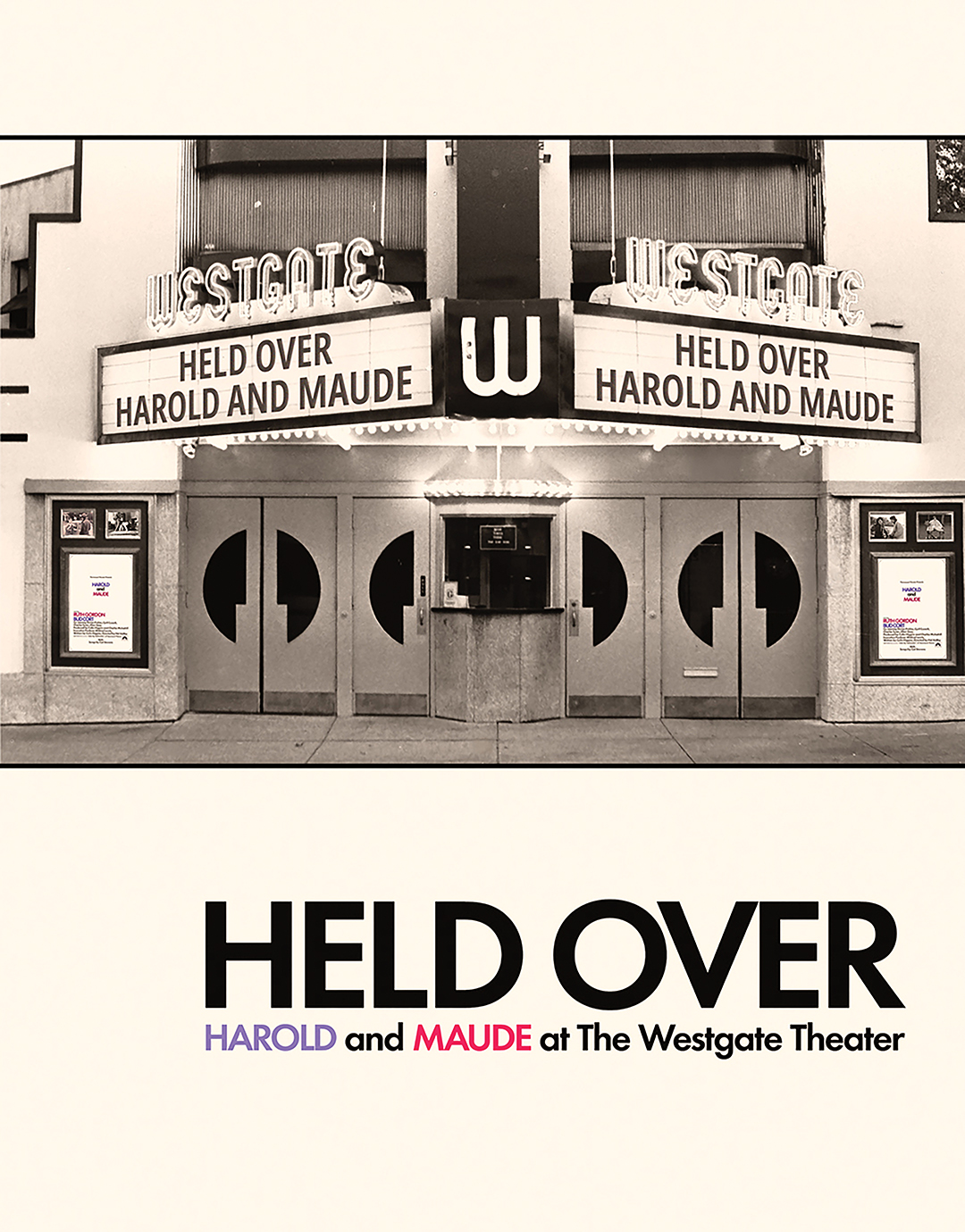
John Gaspard’s book cover was designed by Author Elevator. It is available wherever books are sold.
What do you hope readers take away from the book?
I hope readers are reminded of the power of passionate fandom and word-of-mouth in supporting art that might otherwise be overlooked. As former Westgate manager Ralph Watschke said, after the film ran 1,957 times at his theater: “I’m looking forward to seeing it again.” I hope the book makes readers want to revisit or discover this enduring classic themselves.