One of Faribault Mill’s most iconic designs is its Frontier Wool Blanket. Photos: Faribault Mill
Faribault Mill is where history, craft and stubborn optimism are woven together.
Paul Mooty stands at the bottom of a concrete stairwell in the basement of Faribault Mill in Faribault, Minnesota. An antique scouring line, a machine that used to clean raw wool until the 1950s rests in the corner. Dye vats capable of turning 500 pounds of wool into a myriad of colors stand in the room. The walls are still faintly stained blue from dye that once ran through floodwater. It is the place where, in March 2011, Paul nearly turned around and left.
Seven feet of water had filled this basement just months prior. The plumbing didn’t work. There was a limited electrical system. Chemical residue lingered on the floor, and their guide, Dennis Melchert, who worked at the mill for 30 years and was living in a house on the property, warned Paul not to touch anything. “That was my introduction,” says the Edina resident and vice-chairman of the board of Faribault Mill. “I was thinking, ‘What am I doing here? This place is a mess.’”

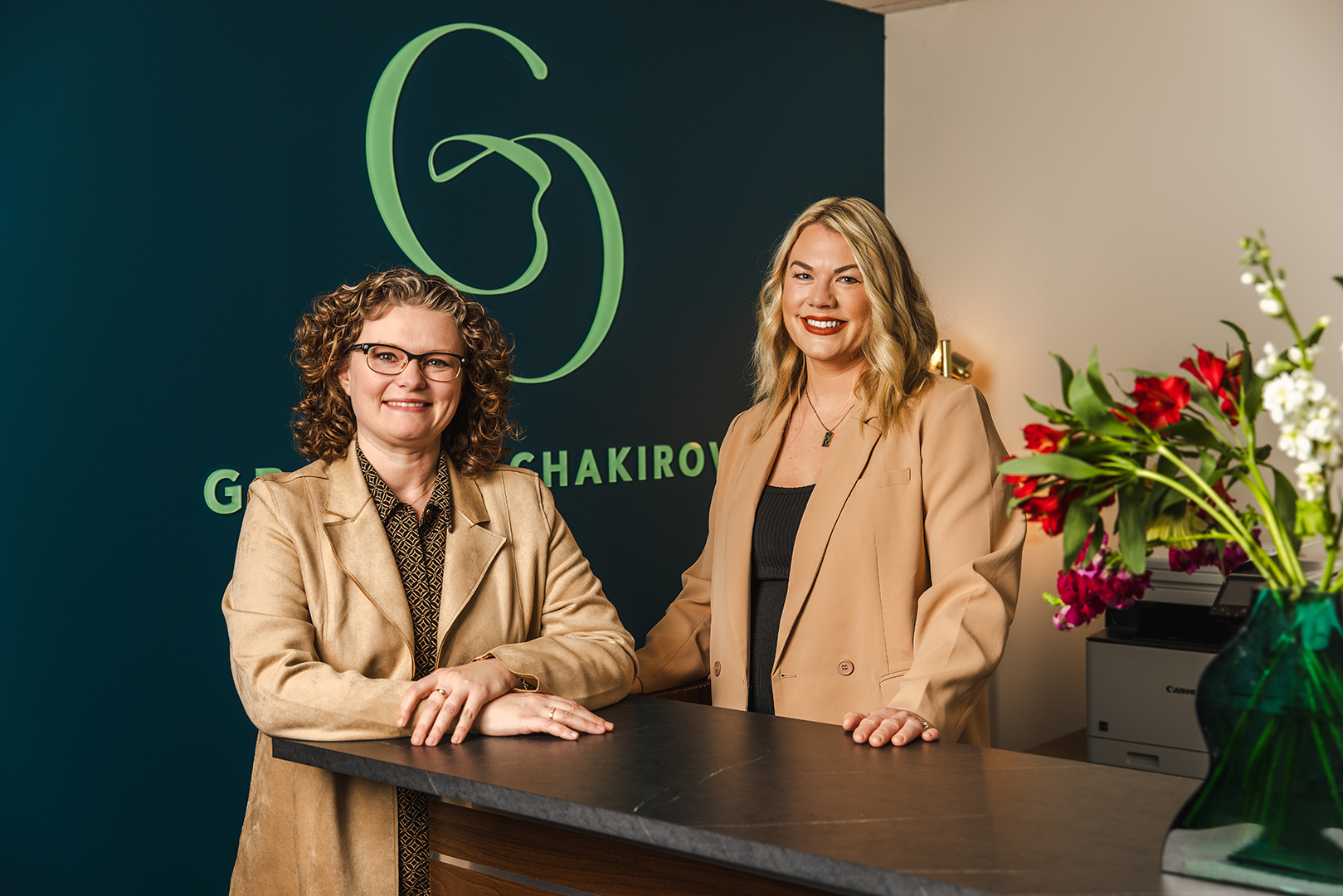
Paul and Jean Mooty. Jean is wearing the Faribault Mill University of Minnesota Throw Blanket.
At the time, the company was called Faribault Woolen Mill. It had been closed for two years. Its 175,000-square-foot factory, perched along the Cannon River about 50 minutes south of the Twin Cities, was silent. It’s been said that once upon a time, half the blankets in America came from this mill. When Paul saw it in 2011, it felt abandoned, waterlogged and destined for dismantling. Paul had arrived almost by accident, invited by a college roommate whose father was touring the property. He rode down with the group, which meant he couldn’t leave early. “If I’d driven myself, I probably would have,” he says.
Instead, Paul stayed for the full two-hour tour. Melchert walked Paul through the building and shared the mill’s story. Founded in 1865, just after the Civil War, Faribault Woolen Mill operated in the same building since 1892. It had been powered first by horses, then by river-driven hydraulic power and eventually by electricity. During World Wars I and II, odds were high that an American soldier carried a Faribault blanket. Under the Klemers and later the Johnson family, the mill survived the Great Depression, innovated washable and moth-proof wool, and became woven into the daily lives of the community.
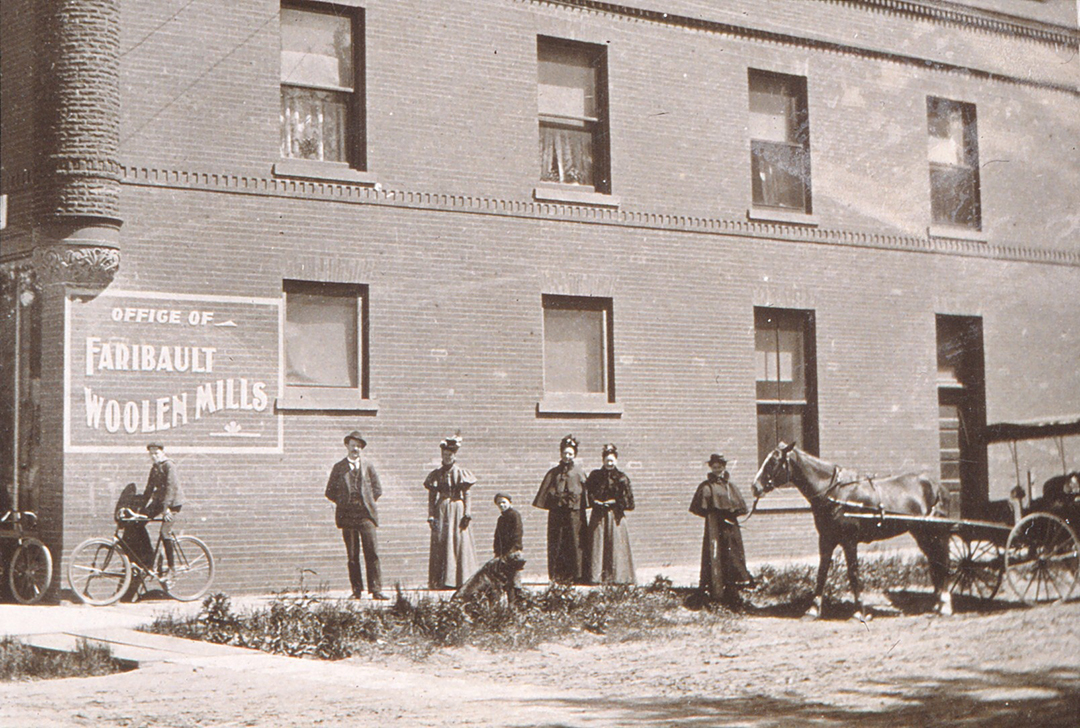
Faribault Woolen Mill was on Second Avenue and Highway 21 in Faribault from 1865–1892.
This story inspired Paul, and after the tour, he drove home and told his wife Jean, “‘What a disaster. But what a cool story. What a special place,’” he says. He was torn between the ruin and the history behind the brand. That got him thinking about the possibility of bringing the mill back to life. Melchert, Paul sensed, was hoping someone would come along and save the mill. “Things happen for a reason,” he says. He thought about the mill for weeks before calling his cousin, Chuck Mooty. The Edina resident and former CEO of International Dairy Queen took a look at the factory and saw its potential. “On March 8, 2011, I walked down those basement stairs. Six weeks later, on April 22, Chuck and I had a signed letter of intent to buy the mill’s assets,” Paul says.
What they bought was a gamble. When the Mootys acquired the assets, they didn’t know if the machines worked. Everything was still there, the dye vats, scouring lines, spinning frames, looms and an archive of patterns. “We bought it and said, ‘All right, let’s see what happens.’ The first day of business was July 5, 2011. Five employees showed up,” Paul says.
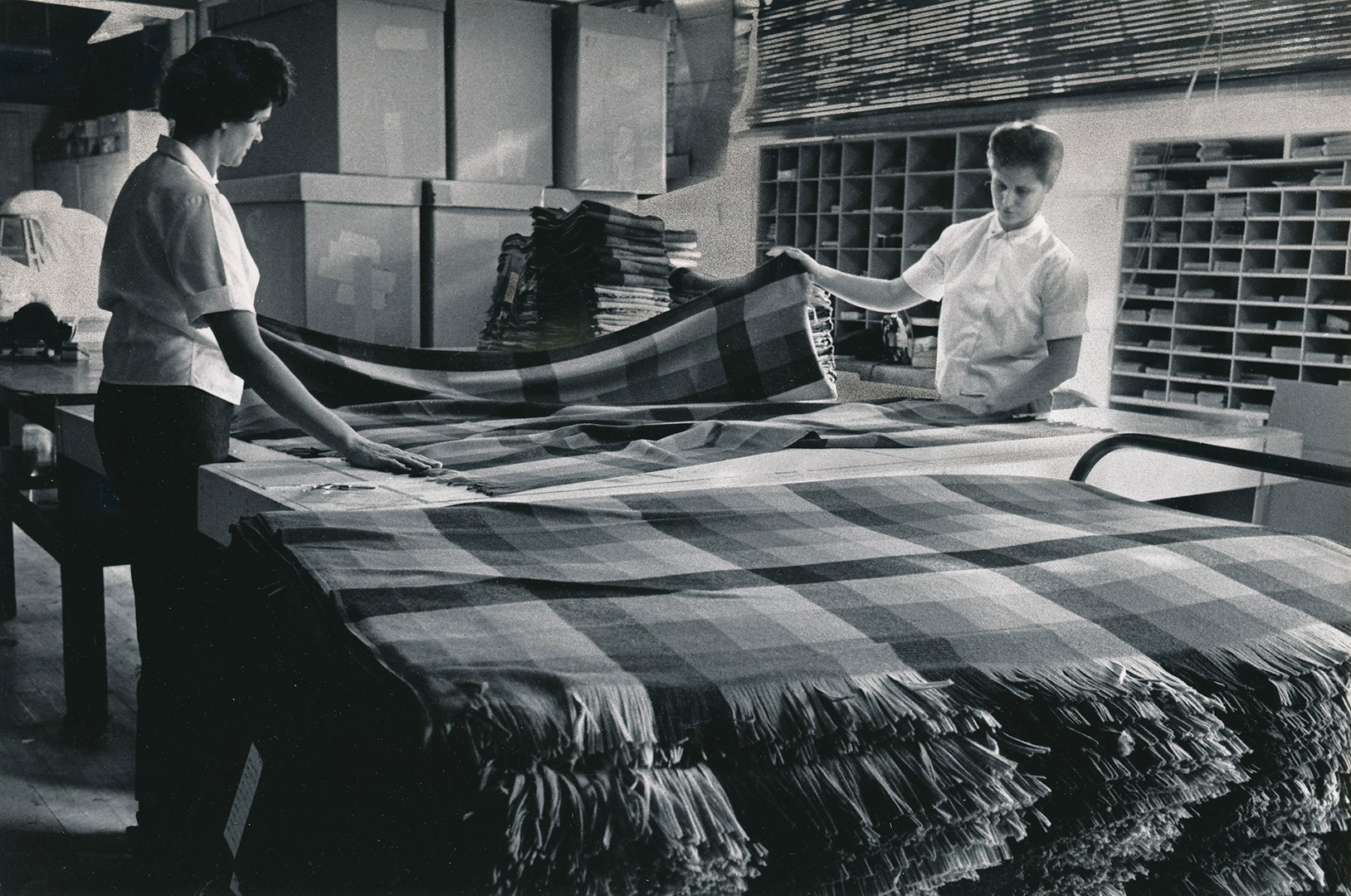
This photo from the mid-1900s shows the old cut and sew process at Faribault Woolen Mill. The final steps include sewing edges, hemming and stitching.
Among those employees were Melchert and Avinash Bhatnagar. They reached out to former workers—people who knew the machines, the rhythms and the quirks of wool manufacturing. By the end of the year, the mill employed 40 people, 37 of whom were former employees, including one woman who had worked there for 63 years, Mary Boudreau. “A lot of that knowledge is gone in this country. We were lucky,” Paul says.
Millions of dollars in renovations were immediate and extensive: a new boiler, repaired electrical and plumbing systems, flood mitigation and building repairs. The basement where Paul once wanted to flee now houses essential infrastructure. Wool arrives already scoured, but the process remains largely intact: dyeing, spinning into yarn, drying, weaving and finishing all exist under one roof. Scrap wool is ground back into fiber and reused. The mill operates as a rare one-stop shop for American wool manufacturing.
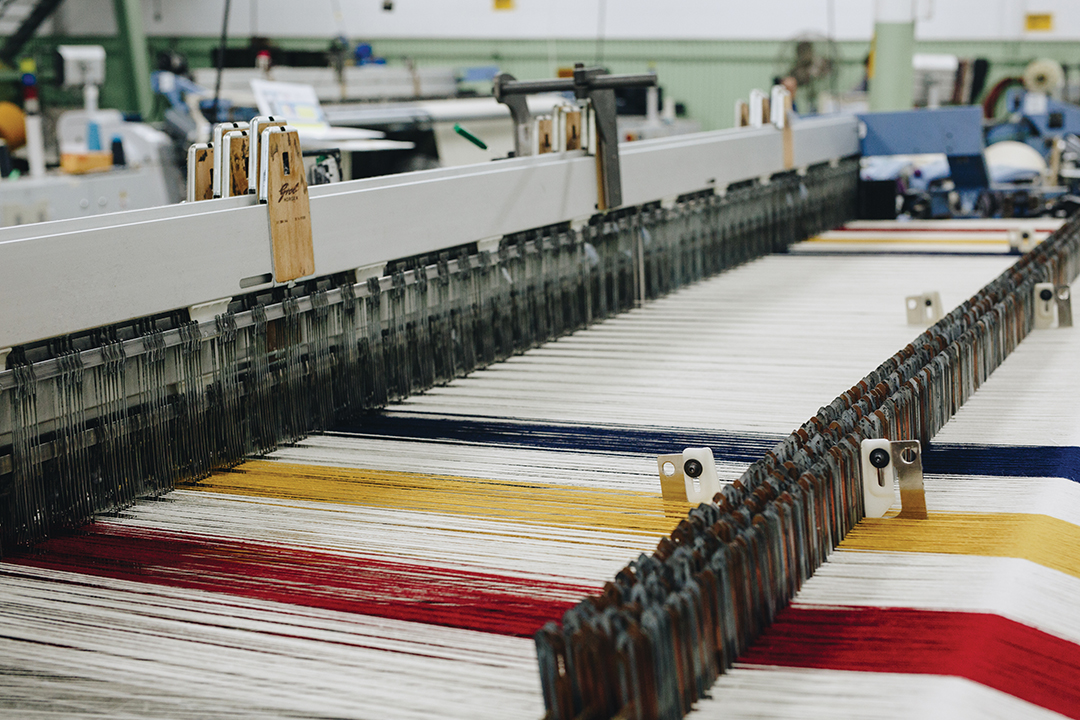
Modern looms weave the Frontier Wool Blanket.
Equally powerful was the brand itself. Faribault Woolen Mill was 144 years old when the Mootys took over. “People spend a lifetime building a brand name,” Paul says. “We started the 100-yard dash more than halfway down the track.” Classic designs like the mill’s three-stripe blanket, made since the 1920s, returned first. Large orders followed, including a 100,000 unit run for JCPenney and contracts to supply the U.S. Army and Navy.
National attention arrived quickly. Media outlets such as The Wall Street Journal and international broadcasters from as far away as Japan took notice of a shuttered American mill coming back to life. In 2017, the company was invited to the White House for its Made In America Showcase. When the call came on a Friday, asking them to be in Washington by Monday morning, Paul knew exactly who to bring along with him.
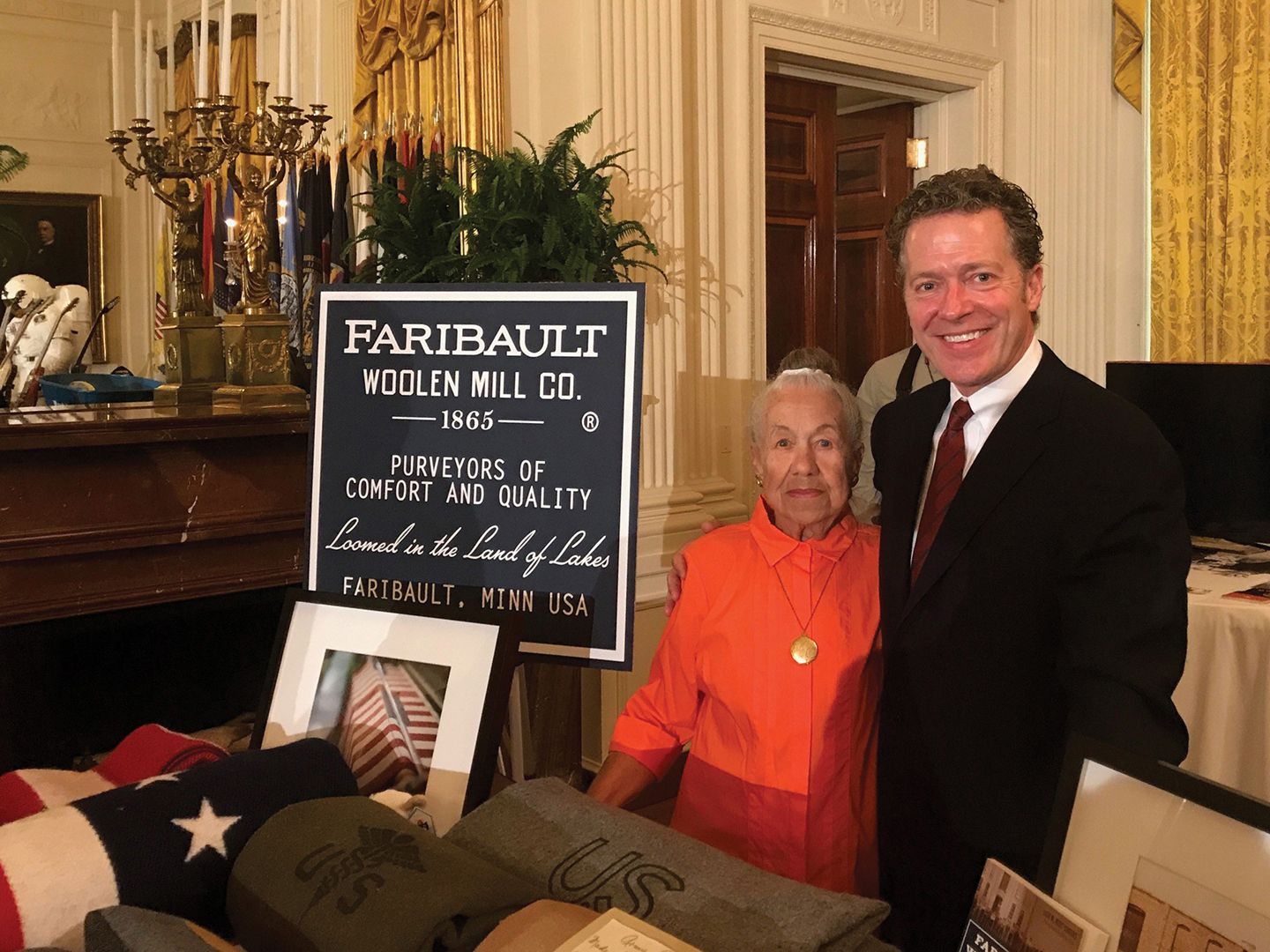
Mary Boudreau worked for the company as a master weaver for decades. When the White House called to invite Faribault Mill to its Made In America Showcase in 2017, Paul Mooty asked Boudreau to attend. She stands beside former CEO Tom Kileen.
“I walked out to the plant and grabbed [Boudreau],” he says. Boudreau was the weave shop lead and master weaver. “I said, ‘They want us at the White House. I can’t imagine a better representative than you.’ She asked, ‘What will I wear?’ It was only the second time in her life she had flown. When she passed away some years later, she was buried wearing a Faribault Mill sweatshirt,” he says.
Moments like that underscore how Paul sees his role. “We’re not owners in the traditional sense,” he says. “We’re stewards. It’s not about us. It’s about the company.” He speaks often of the families who ran the mill for generations and the workers who gave and continue to give their lives to it. Former president of the company, Pete Johnson, told Paul he couldn’t drive past the mill after it closed; it hurt too much. When it reopened, he was overjoyed his family’s legacy would live on.
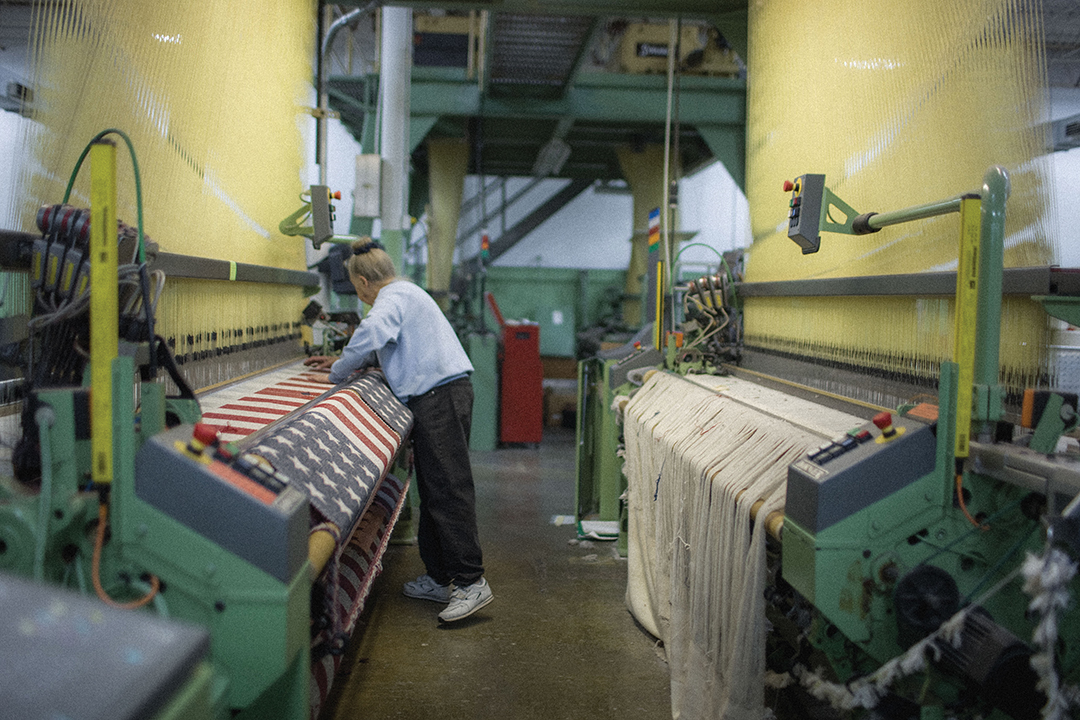
Mary Boudreau at a loom weaving an American Flag Wool Throw.
Today, Faribault Mill is 100 percent American made. “Period. Full stop,” Paul says. The company continues to innovate, expand its supply chain and even operates a cotton mill in Maine to balance seasonal production. It purchased Brahms Mount in 2022. It was that acquisition that prompted the name change from Faribault Woolen Mill to Faribault Mill. Yet the heart of the business remains here in Minnesota. The company merged with CircleRock in 2020, and millions of dollars worth of new machines were purchased. The company’s president and CEO is Ross Widmoyer, and Paul is now vice-chairman of the board. The Mooty family are still part owners of the company. The building is owned by Paul and Jean, and is on the National Register of Historic Places.
“When you pull in here, you feel the history,” Paul says. He looks around the factory room at the old, original brick walls. “If these walls could talk,” he says. He pauses, smiles and then says, “Hopefully, they keep talking for another 160 years.”
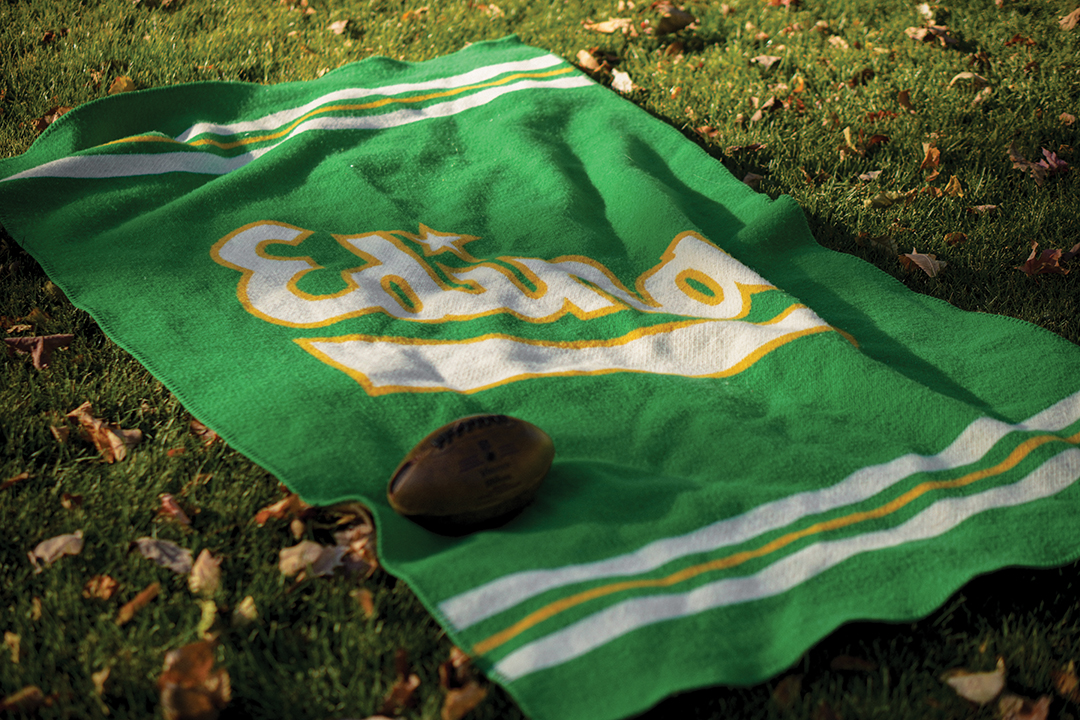
Faribault Mill’s Edina High School Varsity Letter Throw Blanket is a fixture in many homes and is often spotted at outdoor games.
Faribault Mill
Instagram: @faribaultmill