Photo: Chris Emeott
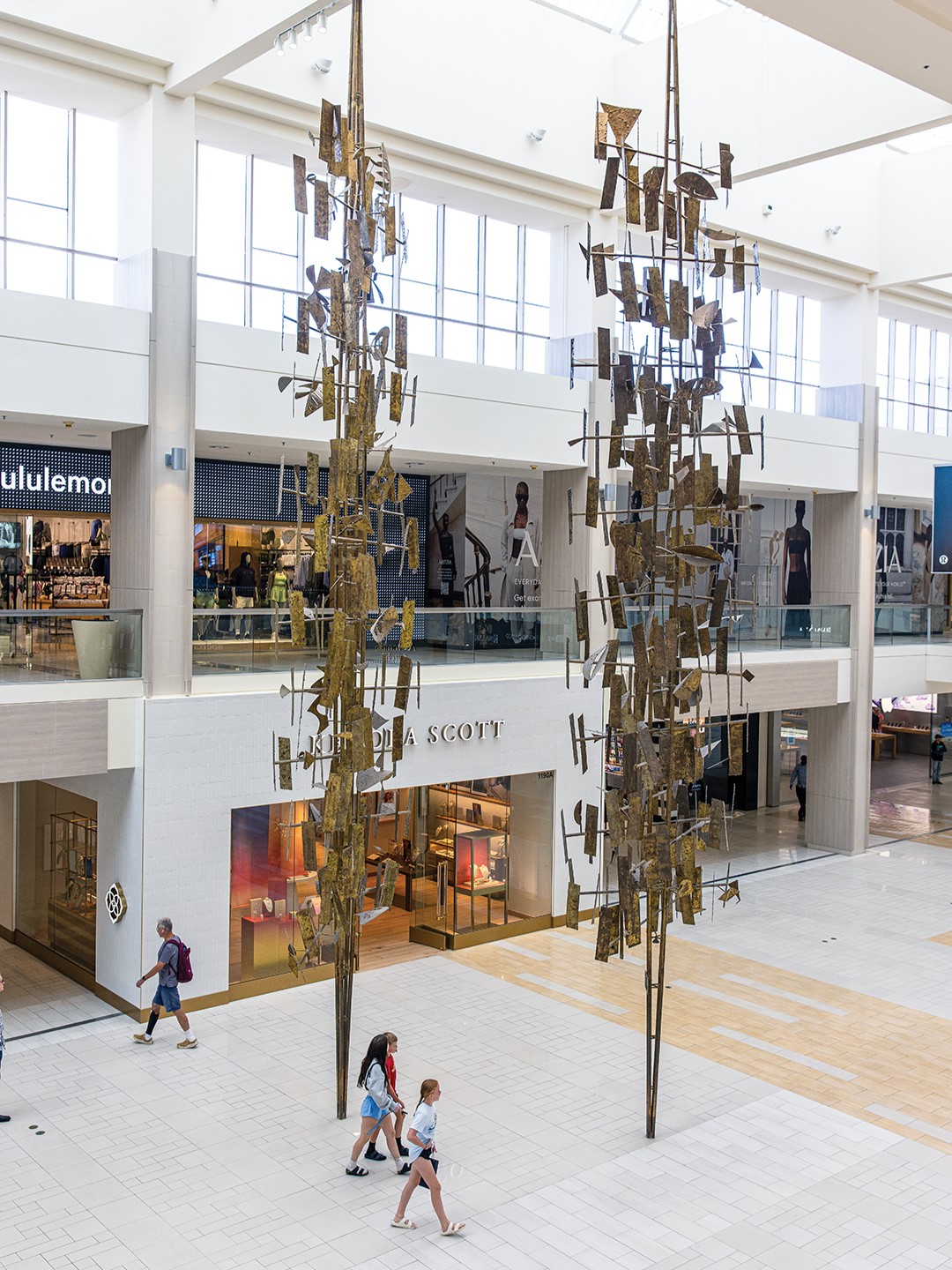
When Victor Gruen was planning the construction of Southdale Center, he followed a habit popular among modernist architects and contacted a well-known sculptor, Harry Bertoia (1915–1978), to create a decorative feature for the United States’ first indoor shopping center. Postwar midcentury architects recognized that their buildings were important and would change the American lifestyle. They were worthy of bold and contemporary creativity, and modern art was often integrated into architectural design. Gruen commissioned Golden Trees from Bertoia, a two-piece, 50-foot-tall steel sculpture coated in bronze. They still proudly stand in the central court of Southdale.
Bertoia was an established modernist artist. After immigrating to Detroit from Italy in 1930, he studied at the Cranbrook Academy of Art. Although he also designed jewelry and furniture, Bertoia focused on metal sculptures in the 1950s. He produced more than 50 public sculptures, including Golden Trees. In the 1960s, Bertoia experimented with sound installations. He manually moved these Sonambient sculptures to make music, and he performed concerts and recorded albums of his sound art. The Weisman Art Museum owns Bertoia’s sound sculpture The Pod (1956), and his art is also in the collections of the Walker Art Center and the Minneapolis Institute of Art.
Minnesota landscape historian Frank Edgerton Martin emphasized the value of Golden Trees and its presence at Southdale. “It’s one of the most important midcentury sculptures in a public space in the United States,” he says, recalling how “magical” the indoor mall felt in the 1950s.
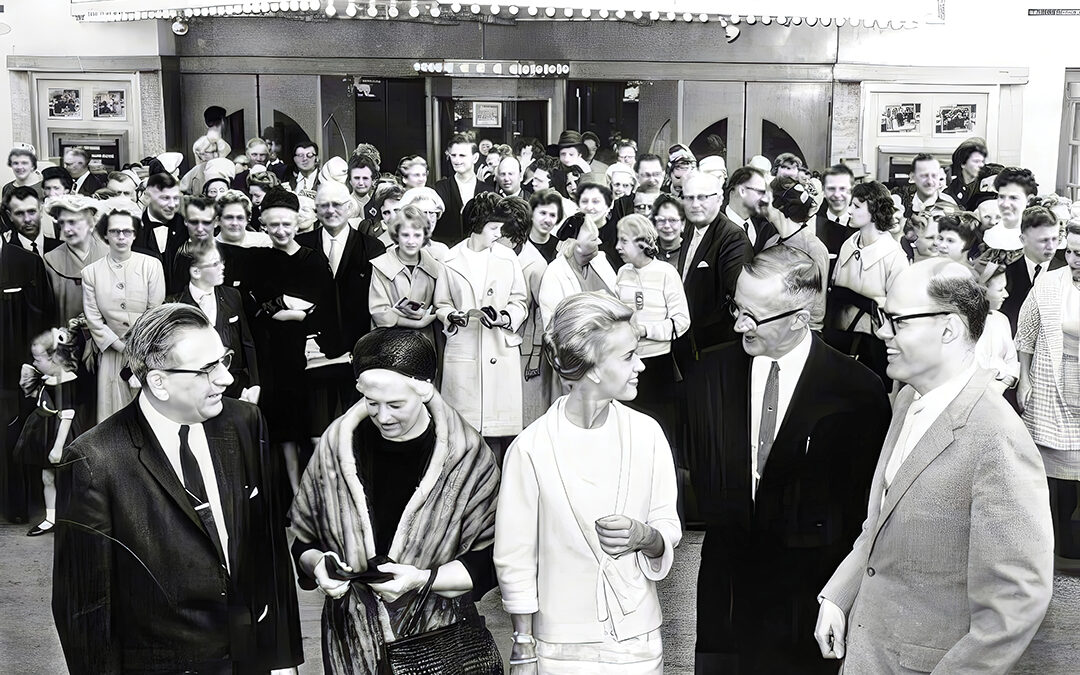
With the opening of Southdale, Gruen was moving the American meeting place and social destination from urban downtown to suburban mall, and Bertoia’s sculpture contributed elegance and beautiful art to this new public space.
Laura Westlund is an art hound for Minnesota Public Radio.