Photos: Chris Emeott
Heirloom clocks and their collectors are keeping the past alive for future generations.
In an era ruled by digital smartphones with lockscreen time displays, the rhythmic and steady tick-tock of a mechanical clock can feel like a piece of nostalgia from decades past. These intricate timekeepers, whether a stately grandfather clock or a delicate mantelpiece chime, carry craftsmanship, sentimental value and stories that cannot be replaced by a smartphone screen. But as the art of clockmaking fades and repair costs climb, many families are tempted to let their old clocks fall silent. For a handful of Edina residents, these timepieces are more than a decoration, they are cherished family heirlooms that are works of art.
“Time is important to me,” says former longtime Edina resident Constance Fantin, who keeps at least one clock in every room of her home. Her favorite is a Howard Miller mantel clock from the 1990s, a birthday gift from her husband, Eric Fantin. “It’s a beautiful piece with inlaid wood and bead detailing. We chose it because it winds by hand. It’s a ritual I love, winding it every Sunday.” Constance says.
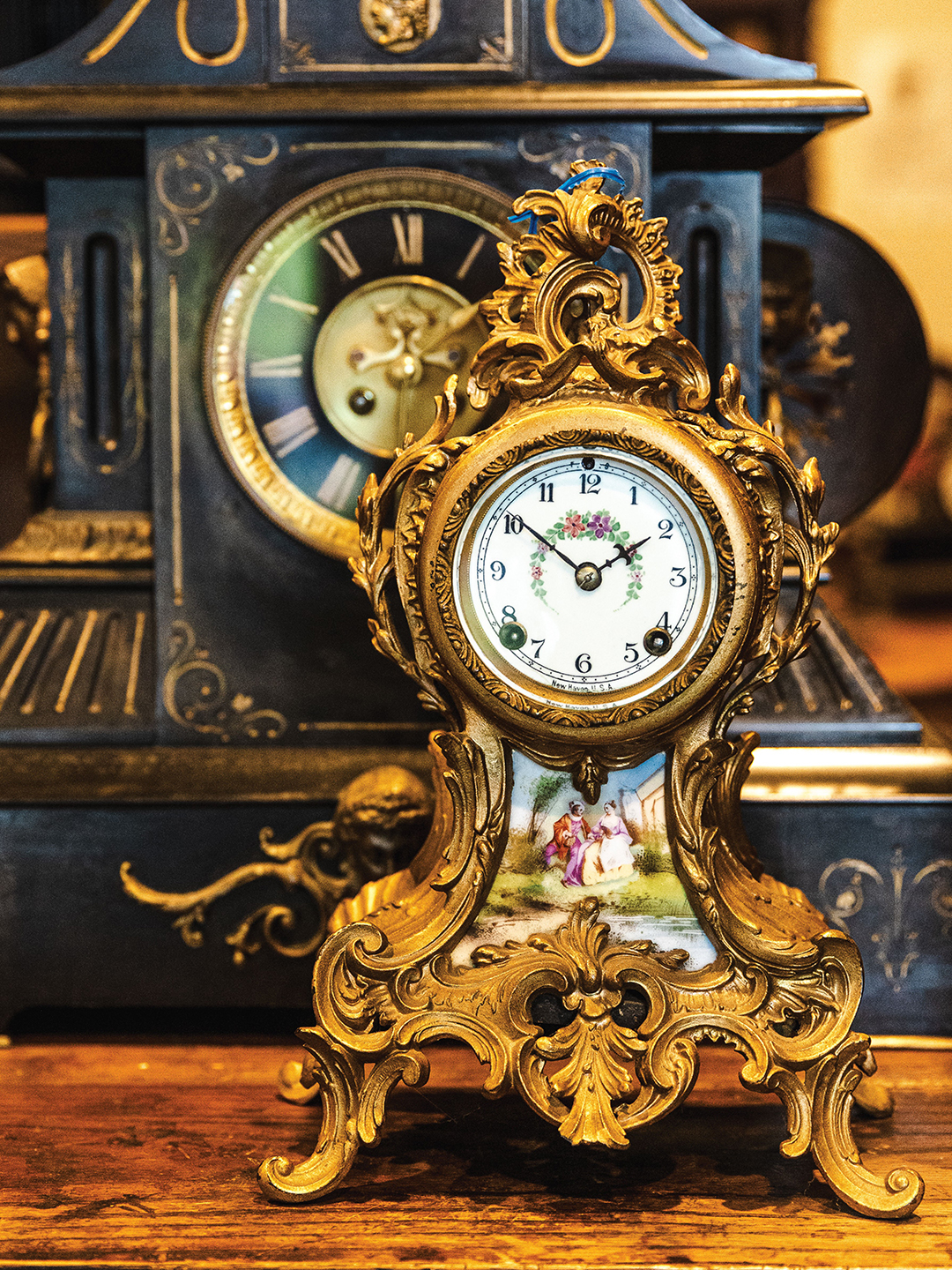
A French mantel clock stands elegantly in front of an antique table clock at Blackstone Manor Clock Repair.
The clock chimes Westminster-style every quarter hour, a sound Constance says she finds comforting, even at night. “It’s the sound of the house,” she says. “I don’t even hear it when I’m sleeping. But if I’m awake, I count the chimes to tell the time.” Her mantel clock holds sentimental weight. “I would never get rid of it, even if no one could repair it anymore. It’s part of our family,” she says.
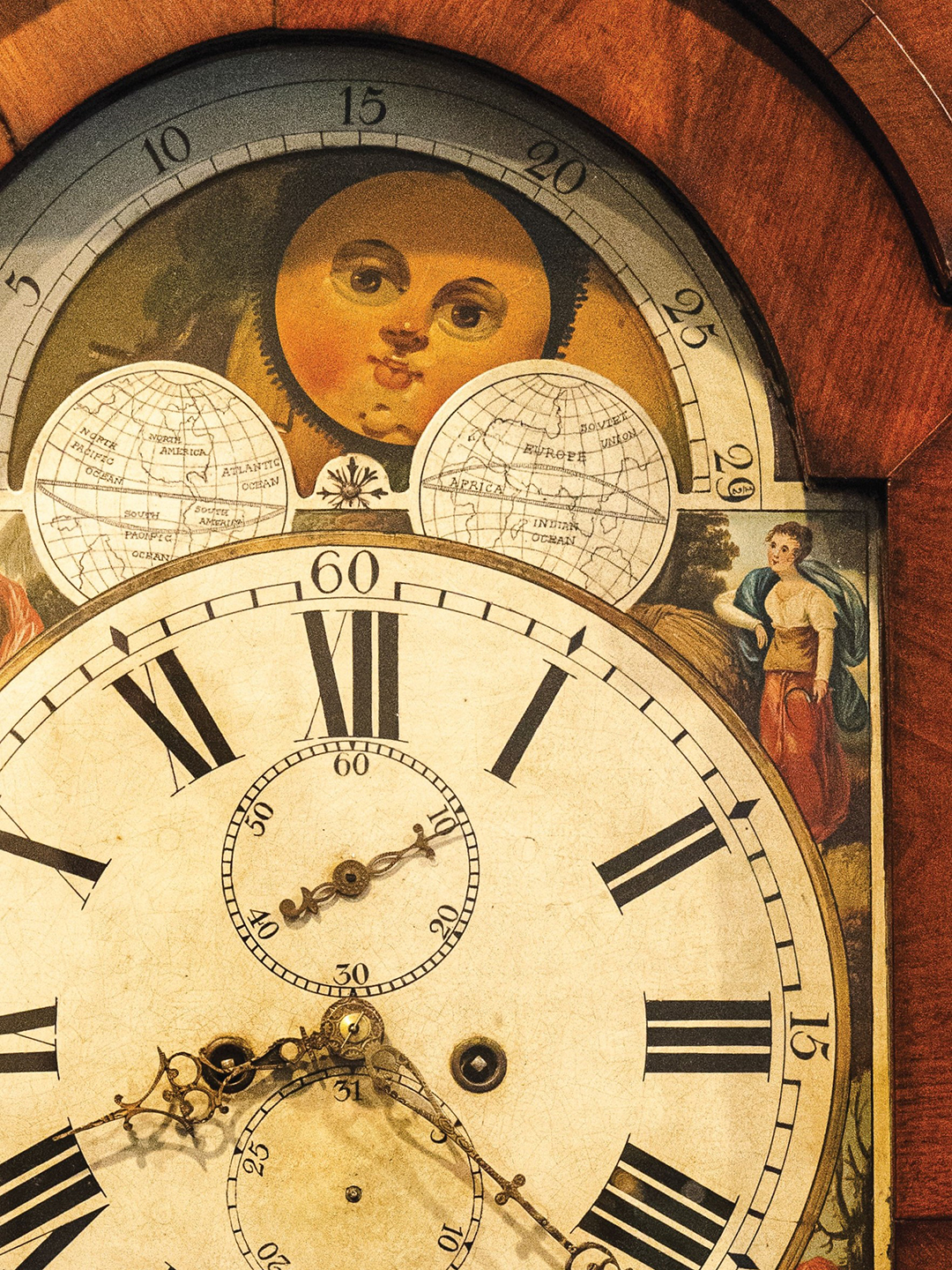
Ken Gudorf’s enthusiasm for clocks began 60 years ago. “The first grandfather clock I bought was in Germany in the 1960s. That clock continues to run,” the Edina resident says. Gudorf has four grandfather clocks, six wall clocks and one carriage clock. “It was used by carriage drivers in the early 1600s and 1700s to tell the time when they were on the road. It’s in my home in Florida. All the clocks I have are all good timekeepers,” he says.
That is thanks to regular maintenance from Blackstone Manor Clock Repair in Hopkins. Owner Mark Purdy is one of the region’s few professional horologists. “Mechanical clocks need to be oiled about every four years,” Purdy says. “When they’re 25 years old or so, then they may need a complete overhaul or a new movement, depending on what it is in there. If it’s an antique, obviously they don’t make them anymore. So we take them apart and overhaul them, make them like new again.”
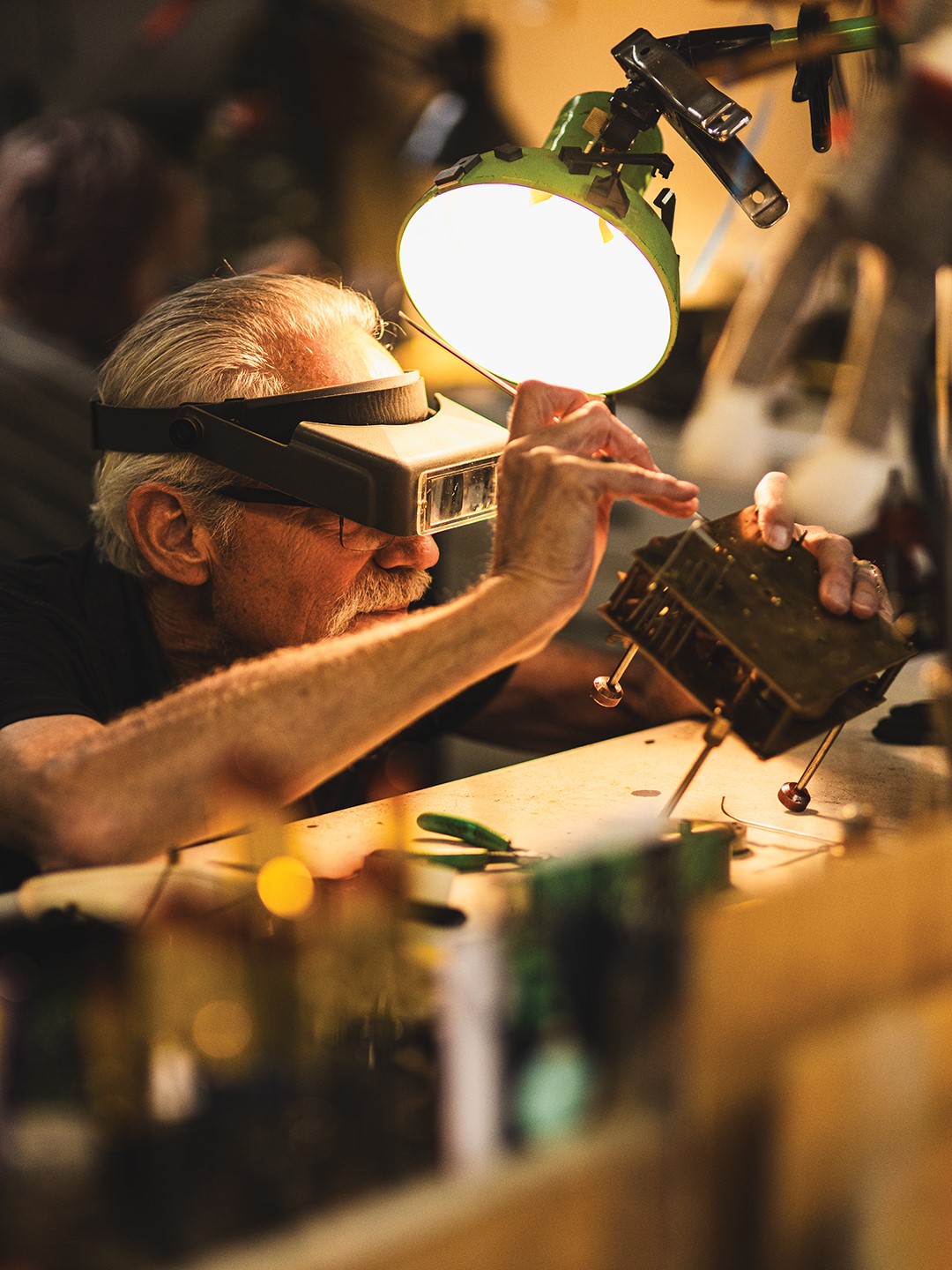
Mark Purdy repairs the inner workings of a clock.
Purdy’s journey into the world of clocks wasn’t planned. After studying criminal justice, he moved to Minnesota and briefly sold security systems. But an older brother with a jewelry shop back in North Dakota sparked Purdy’s interest in clocks. “I started helping him out,” he says. “Then I begged my way into an old clock shop near the Old Log Theatre in Excelsior called Kuempel Chime Clocks.” That shop has since closed, but Purdy stayed in the trade and eventually opened Blackstone Manor.
Purdy’s seen how much these clocks mean to their owners. “People come in with stories. ‘This was Grandma’s clock,’ or, ‘I remember hearing this as a kid,’” he says. Sometimes the cost of repair is worth more than the clock itself. Purdy says he encourages people to keep the clocks even if the cost is too high for repair. “Hang onto them. The next generation might appreciate them more than you think,” he says.
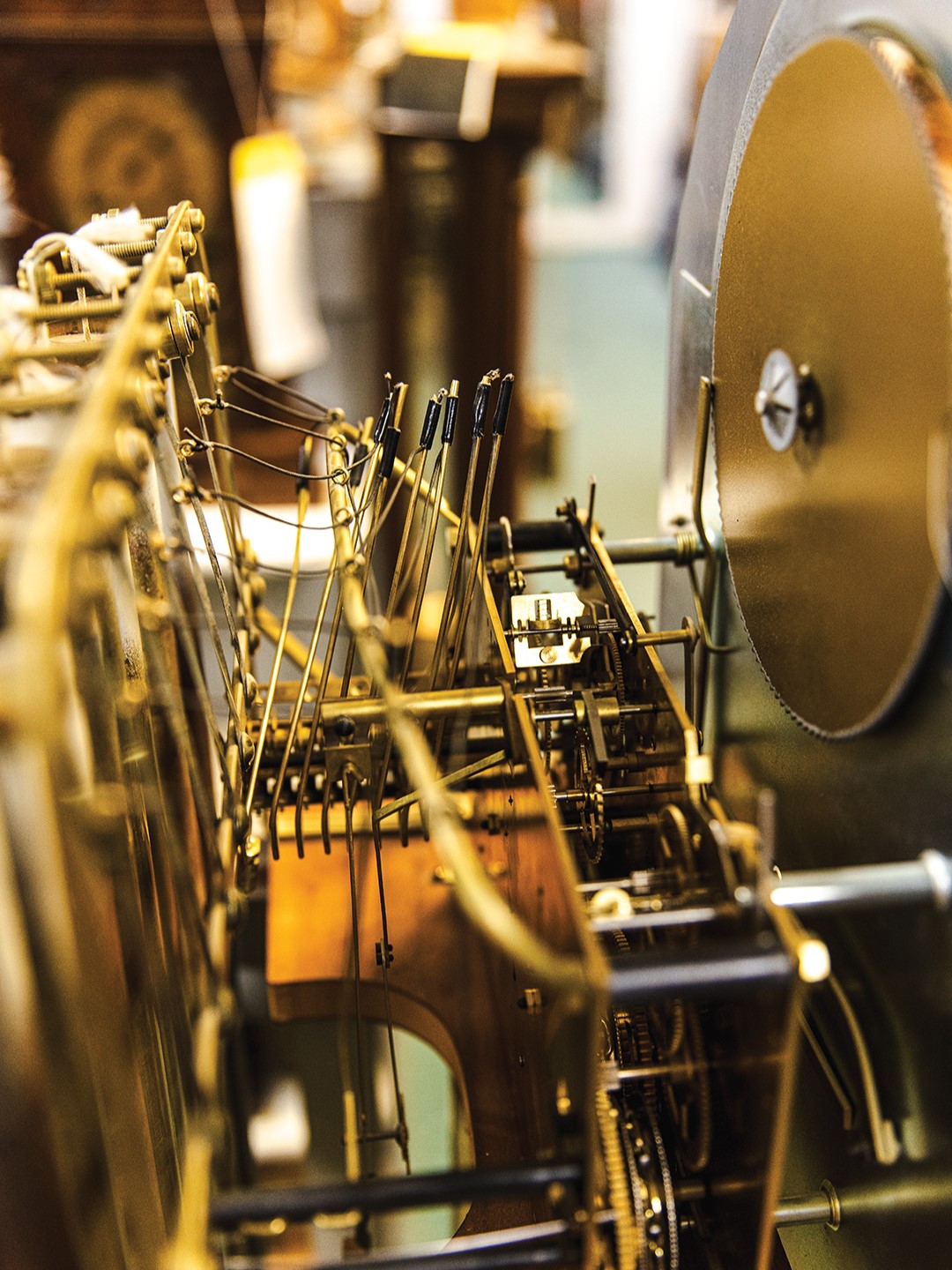
The intricate mechanical movement of a grandfather clock.
One young person already has that appreciation. That is Sam Burns, Purdy’s 20-year-old assistant. “I was fascinated by clocks as a kid,” he says. “My family had a lot of them. When I had to think about what I wanted to do as an adult, this was it.” Burns studied at Gem City College in Quincy, Illinois, one of the last remaining horology trade schools in the United States.
Burns now helps with oiling, inspections and restorations. Both Purdy and Burns make house calls for the more delicate clocks that cannot travel, such as grandfather clocks. Their work ranges from quick 30-minute tune ups to intricate full rebuilds of antique timepieces.
Constance says she’s grateful the tradition still exists. “It’s not just about keeping time. It’s about keeping memories,” she says. “There’s something comforting in hearing that chime, in knowing the clock is still ticking.”
For Gudorf, too, the clocks connect generations. “I call them heirlooms. They can be passed down. My son’s already told me which one he wants,” he says.
At a time when everything feels disposable, these clocks and the people who care for them, remind us that some things are worth preserving. In essence, the items that keep time are in themselves, timeless.
Chime vs. Strike
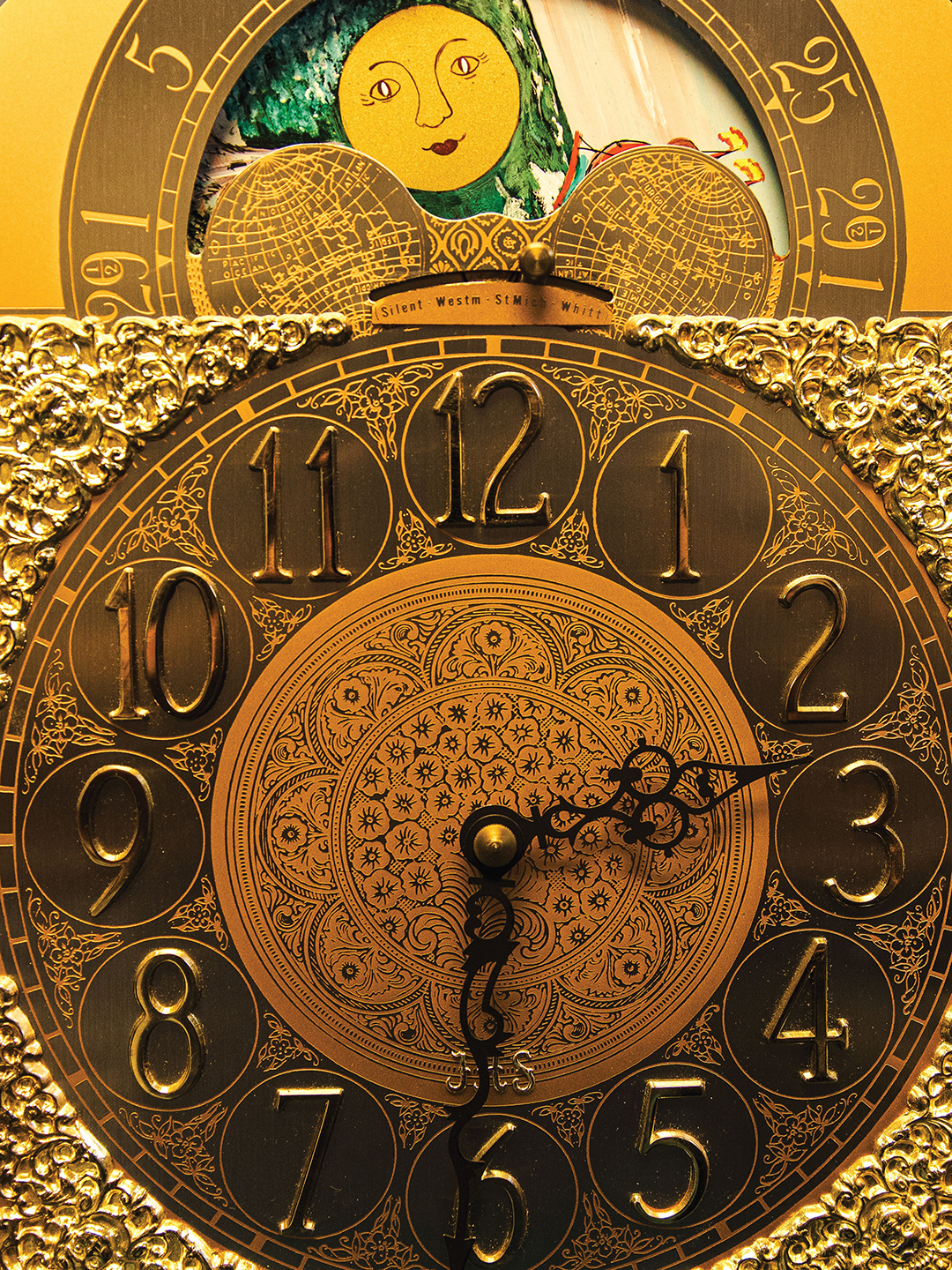
“A lot of people don’t know the difference between chiming and striking,” says Mark Purdy of Blackstone Manor Clock Repair. “Chimes [are] when they play the song. The songs are Westminster, Whittington and St. Michael. Chimes are what you hear every 15 minutes. Strike is the hour.”
Blackstone Manor Clock Repair
Facebook: Blackstone Manor Clock Repair