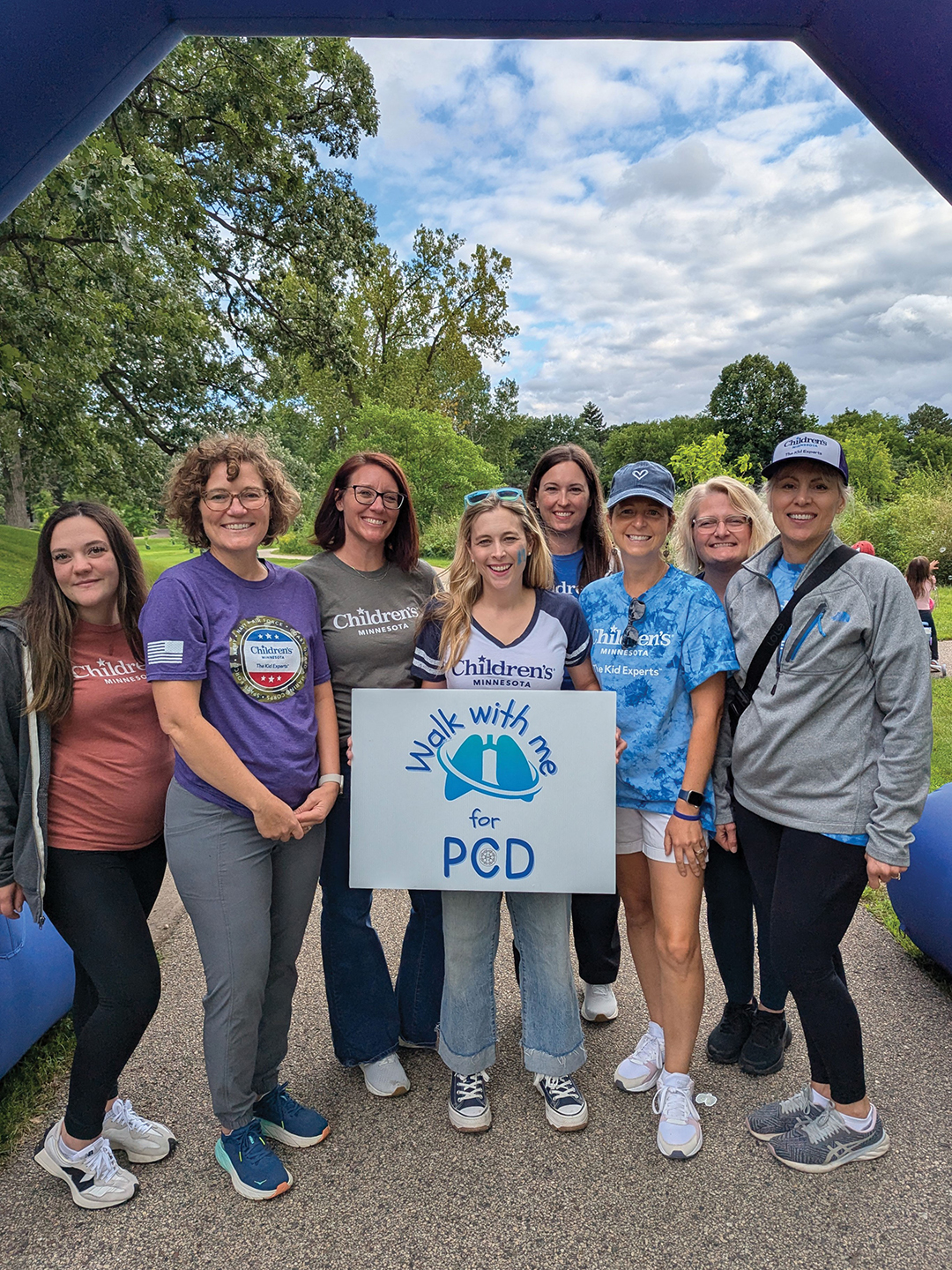
Anne Griffiths, M.D., is seen holding a sign at Walk With Me for PCD, a fundraising event at Rosland Park that took place last August, alongside the team from Children’s Minnesota. The pediatric pulmonologist is an expert on primary ciliary dyskinesia (PCD), a genetic disorder that causes respiratory issues. Photo: Anne Griffiths
A pediatric pulmonologist champions research into a rare disorder.
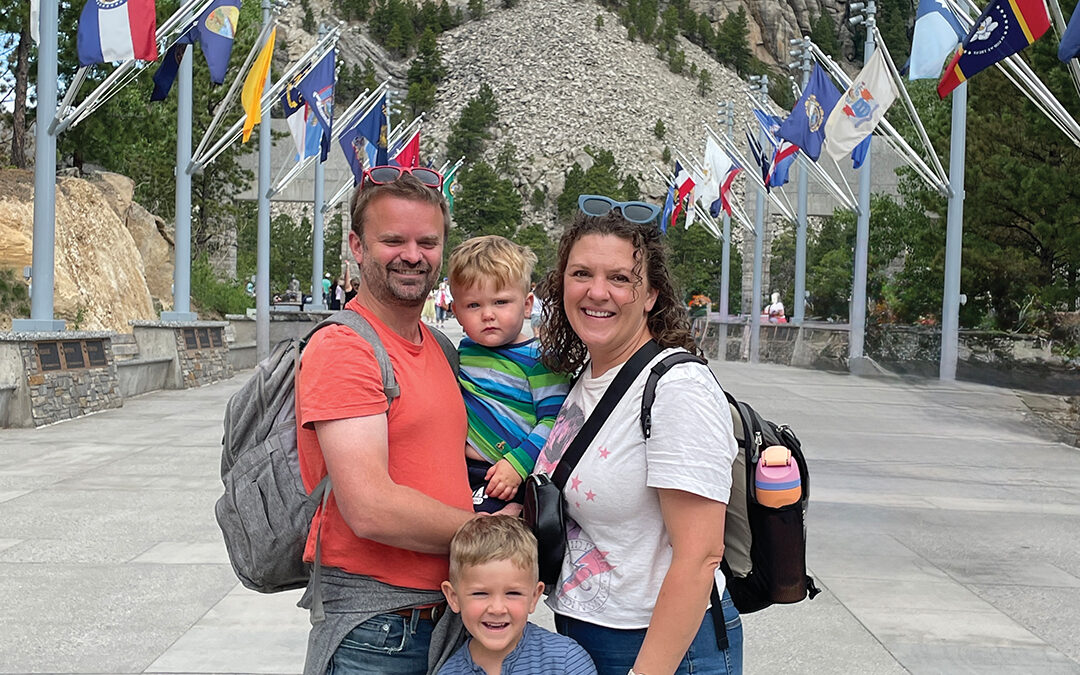
Jack Blemker was just a few hours old when he began to exhibit signs of respiratory distress. The newborn was rushed to the NICU where doctors would soon discover that his organs were reversed; he would be diagnosed with situs inversus (organ reversal) and primary ciliary dyskinesia (PCD), a genetic disorder where hair-like structures called cilia do not function correctly, causing chronic respiratory issues. “It was a huge shock to us,” says Jack’s father, Steve Blemker.
Luckily for Jack, he was born in the right place at the right time. The Twin Cities has emerged as one of the leaders in PCD research and treatment. Children’s Minnesota is a recognized PCD center and Bloomington serves as the headquarters for the PCD Foundation.
Edina resident Anne Griffiths, M.D., is a pediatric pulmonologist at Children’s Respiratory and Critical Care Services and works as the medical director for the organization’s PCD program, in partnership with Children’s Minnesota. Griffiths explains that there is believed to be one case in every 7,500 people in the world, but most are undiagnosed. “We say it’s a rare lung disease, but it’s often undiagnosed,” she says. “There are 1,000 [documented] cases in North America, but we think the actual number is around 40,000.”
PCD, which affects the cilia’s ability to clear mucus from the airways, is characterized by a chronic runny nose, cough and congestion as well as recurrent ear infections. Because those symptoms are shared by the common cold, diagnosis can be a challenge, especially in children. “Most patients have seen a doctor 40 times before diagnosis,” Griffiths says, noting that the earlier patients are diagnosed, the better. Unmanaged PCD can result in chronic infections that may damage airways permanently, affect hearing and lead to severe heart disease.
Steve says that had it not been for his son’s diagnosis, he would have never considered that Jack’s older sister, Lily, might also have PCD. “I could have easily talked myself into her just being a kid prone to catching a cold,” the Linden Hills resident says. But when he was playing with Lily one night and stopped to feel her heart beating on the right side of her chest instead of the left, red flags went up. It turned out that Lily also has situs inversus and PCD. (Half of PCD patients have situs inversus, Griffiths says.)
Today, Jack and Lily are under the care of Griffiths. Their current treatment plan involves daily medication, nebulizers and clearance machines to shake up the mucus and clear their airways. Lily uses her inhaler every night, and both children undergo azithromycin maintenance therapy to reduce respiratory infections. “They’ve been rockstars,” Steve says.
There is currently no cure for PCD, Griffiths says, but doctors across North America are sharing cases to further research and improve treatment options. Last August, Griffiths helped organize an international conference for PCD experts as well as a fundraiser walk at Rosland Park in Edina. Families from across the state and into the Dakotas came together to raise awareness for PCD. “The goal was for people to think of PCD when the symptoms pop up. We’re hopeful we can narrow that gap between the undiagnosed and the diagnosed,” Griffiths says.
Steve and his wife, Molly Blemker, are among those thankful for Griffith’s efforts to make sure Jack and Lily lead a relatively normal life. “We see how much firepower we have here with Griffiths,” Steve says. “I can’t put into words how comforting that is.”
PCD Foundation
Facebook: PCD Foundation